
When Desire Meets God’s Promise
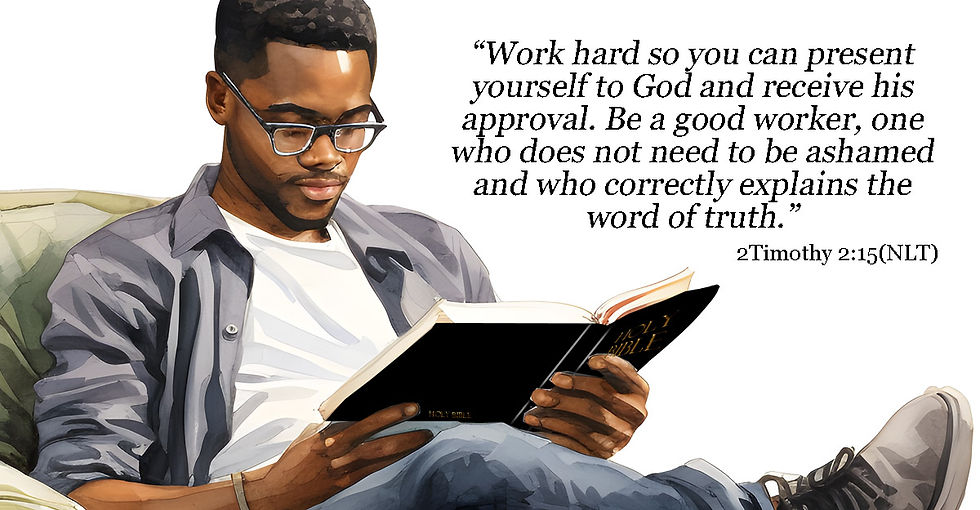
Studying Scripture Grounds Our Faith in Christ
We need praise. We need worship. But if our faith is going to mature, we cannot neglect studying the Word of God. Worship stirs our affection for our Heavenly Father, but Scripture trains our understanding of Him—and without understanding, faith becomes shallow. This matters because all of Scripture points us to Christ. In John 5:39 (NLT), Jesus Himself said, “The Scriptures point to me.” From Genesis forward, God was not simply telling stories; He was laying covenantal groundwork that would ultimately lead to our Lord and Savior, Jesus Christ. To know Christ rightly, we must understand the promises that prepared the way for Him.
When we talk about “covenantal groundwork,” we mean the way God sets the stage for His promises to unfold. From the very beginning, God was establishing a pattern of faith, obedience, and relationship. He was showing how His plans move forward through people who trust Him, how blessings follow faith, and how His promises are passed from one generation to the next. Abraham’s story isn’t just history—it’s the foundation for understanding how God keeps His Word and fulfills His ultimate promise through Jesus Christ.
Abraham: The Father of Believing and the Birthplace of Covenant
When God called Abram to leave everything familiar behind, He wasn’t just relocating a man—He was initiating a covenant. “The Lord had said to Abram, ‘Leave your native country, your relatives, and your father’s family, and go to the land that I will show you’” (Genesis 12:1, NLT). Abram obeyed, and that obedience is why Scripture later refers to him as the father of all who believe. In Genesis 12:2 (NLT), we see that God immediately attached promise to obedience, saying, “I will make you into a great nation. I will bless you and make you famous, and you will be a blessing to others.”
Though the details would unfold over time, that promise set something in motion within Abraham. God’s purpose began to intersect with his deepest longings, and faith was awakened through trust rather than certainty. When divine promise meets a willing heart, movement always follows. Desire aligned with God’s Word propels faith forward.
Human Effort Cannot Produce Divine Promise
Yet Genesis also shows us the danger of trying to fulfill God’s promise through human effort. When Sarah remained barren, she and Abraham attempted to “help” God by taking matters into their own hands. Sarah gave Hagar, her Egyptian handmaiden, to Abraham as a wife, and Hagar became pregnant with Ishmael. Hagar, the servant, now carried Abraham’s child, which created tension and conflict in the household, showing the consequences of trying to force God’s timing.
Even so, God did not revoke His blessing on Ishmael. The Lord was righteous and compassionate, promising that Ishmael would be fruitful and have many descendants: “I will give you more descendants than you can count” (Genesis 16:10, NLT). God blessed Ishmael and cared for him, even though the covenant promise—the line through which Abraham’s ultimate blessing would come—was reserved for Isaac. This distinction matters. God’s covenant cannot be fulfilled through human striving, manipulation, or natural effort. Obedience flows from faith, but the promise itself always comes through God’s supernatural intervention, not fleshly attempts. This pattern foreshadows the gospel: salvation and covenant blessing come through Jesus Christ, produced by God alone, not by our own effort or works.
In Genesis 17:1–2 (NLT), God formalizes His covenant with Abraham, revealing Himself and establishing responsibility. “I am El-Shaddai—‘God Almighty.’ Serve me faithfully and live a blameless life. I will make a covenant with you.” As the chapter unfolds, God changes Abram’s name to Abraham, marking a shift in identity as well as calling. Circumcision was introduced not as the covenant itself, but as the sign of it—a visible mark of an invisible agreement.
God was showing that covenant always leaves evidence. This wasn’t about ritual; it was about identity. Abraham was being formed, not merely instructed. Likewise, believers today are not called to perform religion, but to live as sons and daughters shaped by covenant relationship.
Isaac Points Us Directly to Jesus Christ
When God declared that Sarah—not Hagar—would bear the promised son, Abraham struggled to believe. Still, God was firm: “Sarah, your wife, will give birth to a son for you. You will name him Isaac, and I will confirm my covenant with him and his descendants as an everlasting covenant” (Genesis 17:19, NLT). Isaac had to come through faith, just as Christ would later come not through human will, but through divine promise. Isaac is the child Abraham could not produce by strength—only by promise. And Jesus is the salvation humanity could not produce by works—only by grace. The covenant line was narrowing, pointing steadily toward Christ.
Jesus: The Fulfillment of Covenant Promise
Every promise given to Abraham finds its fulfillment in Jesus Christ. In 2 Corinthians 1:20 (NLT), Paul makes this unmistakably clear when he writes, “All of God’s promises have been fulfilled in Christ with a resounding ‘Yes!’” Jesus is the true Seed of Abraham—the rightful heir of the covenant, and the means by which the blessing extends to the nations. What began in Genesis was never about land alone—it was about redemption. Through Christ, we are brought into that same covenant family, not by lineage, but by faith.
Why This Still Matters for Us Today
This is why we can’t skip studying the Word. These aren’t just old stories—they’re the foundation of everything God is doing. We are covenant people, carrying the life of Jesus inside us, called to live out His promises. God isn’t just giving rules; He’s forming sons and daughters, shaping hearts and faith. When we really know the Word, we see how God moves, how faithful He is, and how every covenant points straight to Christ. Praise gets our hearts awake, worship tunes our spirits, but Scripture roots us deep in Him—where faith stands firm and God’s promises come alive.■
Holy Bible, New Living Translation copyright © 1996, 2004, 2007 by Tyndale House Foundation. Used by permission of Tyndale House Publishers Inc., Carol Stream, Illinois 60188. All rights reserved.
“When Desire Meets God’s Promise”, written for Blessing Beads and More© 2026. All rights reserved. All praise and honor to God through Jesus Christ, our Lord and Savior.


Comments